Carbon mountain bikes can deliver a useful blend of low weight, stiffness, and vibration damping for riders who want faster climbs and confident trail handling. The right choice depends on more than the frame material, however.
Our roundup includes hardtails, soft-tails, full-suspension models, and an all-terrain gravel option, with differences in travel, gearing, wheel size, and intended terrain worth comparing closely.
Best 10 Carbon Mountain Bikes Picks for 2026
Lightweight 29er Trail Pick
Shimano 12-Speed Carbon Mountain Bike
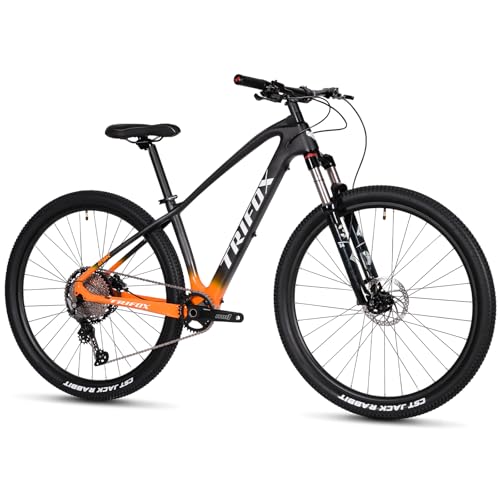
- T800 carbon frame and approximately 26-pound bike weight
- Shimano Deore M6100 12-speed drivetrain
- 130mm lockable fork with hydraulic disc brakes
Best For: Adult trail riders wanting a lightweight 29er hardtail
Technical Trail Specialist
Titan 612 Full-Suspension Carbon Mountain Bike

- Dual-link full-suspension carbon frame
- DNM air shock with lockout and rebound adjustment
- Four-piston brakes and 2.4-inch all-terrain tires
Best For: Technical trails, enduro riding, and rough descents
Enduro Frame Foundation
ICAN P9 29er Carbon Mountain Bike
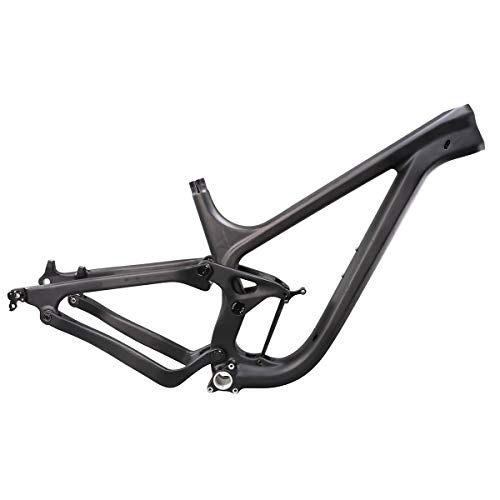
- Full carbon dual-suspension enduro frame
- 150mm frame travel with Boost rear spacing
- Accepts 27.5-plus or 29-inch tires
Best For: Custom enduro builds and frame upgrades
Adventure-Oriented Value
Lantop 610 Carbon Mountain Bike

- Lightweight carbon frame with internal cable routing
- Shimano U6000 and CUES 10-speed drivetrain
- Hydraulic disc brakes and 29-inch wheels
Best For: Mixed-terrain riding, gravel, commuting, and entry-level trails
Trail Control Pick
SAVADECK Titan 612 Carbon Fiber Soft Tail
- Full-suspension carbon frame for technical trails
- Shimano DEORE M6100 12-speed drivetrain
- Four-piston brakes with 2.4-inch tires
Best For: Aggressive trail and enduro-style riding
Lightweight Front-Suspension Pick

- T800 carbon frame with claimed 26-pound weight
- 130mm lockable hydraulic suspension fork
- Shimano Deore M6100 12-speed drivetrain
Best For: Lightweight trail and mountain riding
Compact Fit Trail Pick

- 29-by-15-inch listed size
- Dual-link carbon full-suspension design
- Four-piston brakes and Shimano 12-speed gearing
Best For: Technical trails for riders needing a smaller frame
Best Lightweight Trail Value
- 26-pound T800 carbon frame
- Shimano Deore 12-speed drivetrain
- 130mm fork with hydraulic brakes
Best For: Lightweight mountain riding on varied terrain
Best Mixed-Surface Choice

- 22.92-pound T800 carbon frame and fork
- Shimano U6000 drivetrain
- 700 x 40c all-terrain tires
Best For: Road, gravel, and lighter off-road adventures
Best Full-Suspension Performance
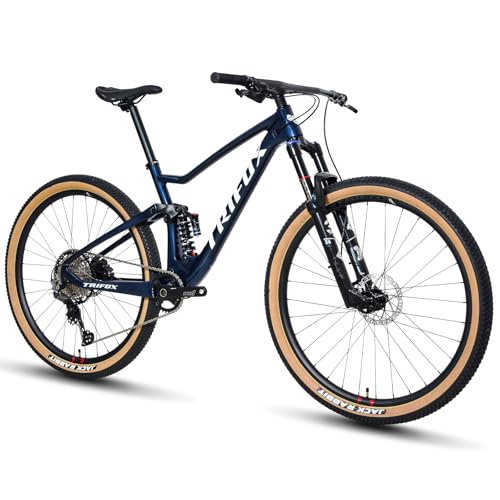
- Carbon dual-suspension frame
- 140mm fork with three ride modes
- Shimano Deore 12-speed drivetrain
Best For: Intermediate riders tackling demanding mountain trails
Lightweight 29er Trail Pick – Shimano 12-Speed Carbon Mountain Bike
This carbon mountain bike combines a lightweight T800 carbon fiber frame with a Shimano Deore M6100 12-speed drivetrain. Its 130mm lockable hydraulic fork, hydraulic disc brakes, and 29-inch tires make it a practical choice for mixed mountain terrain and everyday trail riding.
Best For: Adult riders seeking a lightweight, hardtail-style 29er with broad gearing and front suspension.
Pros:
- Carbon fiber frame keeps the complete bike weight to about 26 pounds.
- Shimano Deore M6100 12-speed system provides a wide range for climbs and flatter sections.
- 130mm lockable fork and Shimano hydraulic disc brakes support varied terrain and conditions.
- 85% pre-assembled and supplied with installation tools.
Cons:
- Front suspension only; it does not provide rear-shock comfort.
- Assembly and frame-size selection still require attention before riding.
With internal cable routing, a tapered head tube, and 29-by-2.1-inch tires, this model emphasizes clean handling and traction without adding unnecessary complexity. It is a well-rounded option for riders prioritizing low weight and dependable trail components.
Technical Trail Specialist – Titan 612 Full-Suspension Carbon Mountain Bike
For demanding off-road riding, this carbon mountain bike stands out with a full-suspension carbon frame, dual-link suspension, and a DNM air shock with hydraulic lockout. Its Shimano Deore 12-speed drivetrain, four-piston brakes, and 2.4-inch tires are aimed at technical trails, rocky descents, and varied surfaces.
Best For: Experienced riders who want full-suspension control for technical trails, enduro-style riding, and rough descents.
Pros:
- Full-suspension carbon frame includes a reinforced rear triangle and dual-link design.
- DNM air shock offers three-stage lockout and rebound adjustment.
- Four-piston hydraulic disc brakes are designed for strong stopping and heat management.
- 2.4-inch Continental all-terrain tires suit mud, gravel, and uneven ground.
Cons:
- More specialized suspension hardware may require more setup than a hardtail.
- The listed wheel size is 27.5 inches, rather than a 29er configuration.
- Its trail-focused equipment may be more than casual riders need.
The Titan 612 is the most aggressive option in this group. Lockout adjustment, rebound tuning, thru-axle construction, and upgrade support for 2.6-inch tires give it a stronger technical-trail focus than simpler carbon mountain bikes.
Enduro Frame Foundation – ICAN P9 29er Carbon Mountain Bike
The ICAN P9 is a carbon mountain bike frame platform for riders building or upgrading a dual-suspension enduro setup. It provides 150mm of frame travel, Boost rear spacing, and compatibility with either 27.5-by-3.0-inch or 29-by-2.3-inch tires.
Best For: Riders and builders seeking a carbon enduro frame with Boost compatibility and flexible wheel-size options.
Pros:
- Full carbon fiber dual-suspension frame designed for enduro use.
- 150mm of frame travel supports a more aggressive trail setup.
- 148-by-12mm rear thru-axle spacing promotes a Boost-based configuration.
- Supports both 27.5-plus and 29-inch tire formats.
Cons:
- This listing is a frame-focused product, not a complete ready-to-ride bicycle.
- Shock and other build components may need to be sourced separately.
- Compatibility and sizing should be confirmed before assembling a complete bike.
The P9 makes the most sense for experienced cyclists comfortable planning a custom build. Its travel, axle spacing, and tire clearance offer a capable foundation, but buyers should budget for the remaining components and verify fit before purchase.
Adventure-Oriented Value – Lantop 610 Carbon Mountain Bike
This carbon mountain bike pairs a lightweight carbon fiber frame with a Shimano U6000 10-speed drivetrain and hydraulic disc brakes. Its spring fork, 29-inch wheels, and multi-terrain design make it suited to recreational off-road riding, gravel routes, and entry-level trail use.
Best For: Riders who want a relatively simple carbon 29er for mixed terrain, commuting, gravel, and introductory mountain biking.
Pros:
- Carbon frame helps reduce weight while resisting corrosion.
- Shimano U6000 shifter and U6020 CUES rear derailleur provide 10-speed gearing.
- Hydraulic disc brakes offer controlled stopping in varied riding conditions.
- Approximately 90% pre-assembled, with sizes listed for several rider heights.
Cons:
- Its 10-speed drivetrain has fewer gears than the 12-speed models in this selection.
- The spring fork is less adjustable than an air-shock suspension system.
- The listing details describe the suspension as rigid despite also identifying an oil spring fork, so buyers should verify the exact configuration.
The Lantop 610 is a practical middle-ground choice for riders who value low weight and easy setup over highly specialized suspension. Its 29-inch wheels, hydraulic brakes, and 10-speed CUES drivetrain suit general-purpose riding across paved and unpaved routes.
Trail Control Pick – SAVADECK Titan 612 Carbon Fiber Soft Tail
The SAVADECK Titan 612 is a capable choice among carbon mountain bikes for riders who want full suspension, a wide-range 12-speed drivetrain, and equipment suited to technical terrain. Its carbon frame, dual-link suspension, four-piston brakes, and 2.4-inch tires favor demanding trail use over casual pavement riding.
Best For: Adult riders tackling rocky descents, root-filled climbs, and aggressive all-terrain trails.
Pros:
- Carbon full-suspension frame with reinforced rear triangle and internal cable routing.
- DNM air shock offers three-stage lockout and rebound adjustment.
- Shimano DEORE M6100 12-speed groupset provides a broad gear range.
- Four-piston hydraulic disc brakes and 2.4-inch Continental tires support technical riding.
Cons:
- Its aggressive trail-focused setup may be more bike than casual riders need.
- The listed 29-by-17-inch size may not suit every rider.
Choose this model if downhill control, suspension tuning, and traction are higher priorities than a simple, lightweight cross-country setup. The two-year limited warranty is an additional ownership consideration.
Lightweight Front-Suspension Pick – Trifox Carbon Fiber 29er
This Trifox 29er is one of the more streamlined carbon mountain bikes for riders who prefer a front-suspension design. The T800 carbon frame, claimed 26-pound vehicle weight, 130mm lockable fork, and Shimano Deore 12-speed system create a practical setup for varied mountain terrain.
Best For: Adult riders seeking a lightweight hardtail-style setup with front suspension and 29-inch wheels.
Pros:
- T800 carbon fiber frame is designed for a sturdy, lightweight structure.
- Lockable hydraulic fork provides 130mm of travel and adjustable suspension use.
- Shimano M6100 Deore 12-speed shifting system supports varied terrain.
- Shimano hydraulic disc brakes and 29-by-2.1-inch tires add control and traction.
Cons:
- Front suspension does not provide the rear-wheel compliance of a full-suspension bike.
- Wheel material is listed as aluminum rather than carbon fiber.
- The one-year warranty is shorter than some competing options in this roundup.
Its 85% pre-assembly and included tools may make setup approachable, while the available 15.5-, 17-, and 19-inch sizes offer useful fit choices. Confirm the selected frame size before ordering.
Compact Fit Trail Pick – SAVADECK Titan 612 Green
This green SAVADECK Titan 612 gives carbon mountain bike shoppers the same trail-oriented component package as the Titan platform in a listed 29-by-15-inch size. Its dual-link full suspension, 12-speed Shimano drivetrain, four-piston brakes, and wide tires are aimed at unpaved trails and demanding terrain.
Best For: Adult riders who need a smaller listed frame size for technical trails and unpaved riding.
Pros:
- Carbon full-suspension frame uses a reinforced rear triangle and internal cable routing.
- DNM air shock includes hydraulic lockout, three stages, and rebound adjustment.
- Shimano DEORE M6100 12-speed gearing is suited to climbs and fast trail sections.
- Four-piston hydraulic brakes and 2.4-inch Continental tires target rough, varied terrain.
Cons:
- The listed 29-by-15-inch size may be unsuitable for taller riders.
- Wide, aggressive trail components may feel unnecessary for primarily paved riding.
Consider this version when fit is the deciding factor and you want the Titan’s suspension and braking equipment in a smaller listed size. Its two-year limited warranty and included tool kit add practical ownership value.
Best Lightweight Trail Value – 29er Carbon Mountain Bike
For riders comparing carbon mountain bikes, this 29er combines a reported 26-pound T800 carbon frame with a 12-speed Shimano Deore M6100 drivetrain. Its 130mm lockable hydraulic fork, hydraulic disc brakes, and wide tires make it a practical choice for varied mountain terrain.
Best For: Adult riders wanting a lightweight hardtail-style mountain bike with broad trail capability and straightforward assembly.
Pros:
- Lightweight T800 carbon frame with internal cable routing.
- Shimano Deore M6100 12-speed shifting system.
- 130mm lockable fork and Shimano hydraulic disc brakes.
- 29 x 2.1-inch tires provide added traction and stability.
Cons:
- Front suspension only, rather than a dual-suspension design.
- Reported weight and fit vary by selected frame size.
This model is a balanced option for riders prioritizing low weight, dependable Shimano components, and adjustable front suspension without moving to a full-suspension setup.
Best Mixed-Surface Choice – Carbon Gravel Adventure Bike
Although designed as a gravel bike, this carbon model is worth considering alongside carbon mountain bikes for riders who split time between pavement, gravel, and unpaved trails. It pairs a 10.4kg T800 carbon frame and fork with Shimano U6000 components, hydraulic brakes, and 700 x 40c tires.
Best For: Commuters and adventure riders seeking a lightweight carbon bicycle for paved roads, gravel, and moderate off-road routes.
Pros:
- Lightweight T800 carbon frame and fork at a reported 22.92 pounds.
- Shimano U6000 drivetrain components for crisp shifting.
- Hydraulic disc brakes and internal cable routing.
- 700 x 40c tires support mixed-surface riding.
Cons:
- Rigid suspension is less suited to technical mountain trails.
- Its gravel configuration differs from a dedicated mountain bike setup.
This is the strongest fit for riders who value efficiency and versatility across roads and lighter trails rather than maximum suspension performance on rough mountain terrain.
Best Full-Suspension Performance – 29er Carbon Trail Bike
Among carbon mountain bikes, this full-suspension 29er is built for riders who want more control and comfort on demanding trails. The carbon frame weighs about 27.8 pounds, while the 140mm fork, rear shock, three ride modes, and 29 x 2.25-inch tires support XC, enduro, and marathon-style riding.
Best For: Intermediate trail riders who need dual suspension, stable 29er handling, and adjustable suspension behavior.
Pros:
- Carbon full-suspension frame with a reported 27.8-pound weight.
- 140mm fork and rear shock with Descend, Traction Control, and Lockout modes.
- Shimano Deore M6100 12-speed drivetrain and hydraulic disc brakes.
- 29 x 2.25-inch knobby tires add traction and stability.
Cons:
- Supplied size is listed as large with a 20.5-inch frame.
- At about 27.8 pounds, it is heavier than the listed carbon gravel model.
The dual-suspension design and adjustable modes make this the most trail-focused option in the group, particularly for riders who value descending control and adaptable suspension.
How We Picked These Carbon Mountain Bikes
We focused on the specifications that most directly affect trail performance and ownership: carbon frame construction, suspension design, fork travel, drivetrain range, hydraulic braking, wheel size, axle standards, and intended riding style. The selection covers accessible cross-country and trail bikes as well as more capable enduro-oriented builds. We also considered whether each bike’s component package appears appropriately matched to its intended use.
Because listed specifications and included equipment can vary by size or seller, confirm the exact model, frame size, assembly requirements, warranty, and return policy before ordering.
Quick Comparison
| Bike type | Best suited to | Typical strengths |
|---|---|---|
| Hardtail or soft-tail | Cross-country, fitness, and smoother singletrack | Lower weight, simpler maintenance, efficient climbing |
| Full suspension | Technical trails, descents, and rough terrain | More control, traction, and comfort over obstacles |
| Enduro-oriented full suspension | Steep, aggressive riding | Longer travel and stronger downhill capability |
| Carbon gravel bike | Mixed pavement, gravel, and light trails | Speed and versatility outside traditional MTB terrain |
Key Buying Factors for Carbon Mountain Bikes
Frame and Suspension Design
Choose a hardtail or soft-tail if efficient pedaling, reduced maintenance, and smoother trails are priorities. Full suspension is preferable for repeated roots, rocks, drops, and technical descents. Fork travel around 120–140mm suits many trail riders, while 150mm or more generally favors aggressive terrain and downhill control.
Drivetrain and Brakes
A 12-speed Shimano Deore setup offers a broad climbing range and close gear steps, while a 10-speed system can be a sensible value choice for recreational riding. Hydraulic disc brakes are strongly preferred for predictable control, especially on wet or steep trails. Check rotor sizes and lever reach if you regularly ride long descents.
Fit, Wheels, and Standards
Correct frame sizing matters more than small component differences. Use the manufacturer’s height and inseam chart, then verify reach and standover if available. Twenty-nine-inch wheels roll efficiently over obstacles, while smaller wheels can feel more maneuverable for shorter riders. Boost spacing, axle dimensions, and replacement-part availability also affect long-term serviceability.
Weight, Setup, and Support
Carbon reduces weight and can improve ride feel, but it does not eliminate the need for careful inspection, correct torque, and crash awareness. Budget for professional assembly or a thorough setup, and confirm that replacement derailleur hangers, bearings, wheels, and suspension parts are obtainable.
Who Should Buy Which Carbon Mountain Bikes?
Choose a lighter hardtail or soft-tail for commuting, fitness, cross-country mileage, and smoother singletrack. Select a 130–140mm full-suspension model for a balanced trail bike that can climb efficiently while handling rough descents. The ICAN P9 is the more natural fit for riders prioritizing enduro capability and longer-travel performance. For mixed road and gravel use rather than technical mountain trails, the SAVADECK carbon gravel bike is the more appropriate category. If you are new to mountain biking, prioritize fit, dependable brakes, local service, and an easy-to-verify warranty over the lowest listed weight.