Choosing among the best mountain bikes means balancing fit, terrain, suspension, gearing, braking, and budget. The right bike should feel stable and controllable on your usual routes—not merely look capable in a product listing.
This roundup compares 10 options ranging from practical entry-level trail bikes and fat-tire models to lightweight carbon-fiber designs, helping riders match features to skill level and riding goals.
Best 10 Mountain Bikes Picks for 2026
Fat-Tire Trail Cruiser
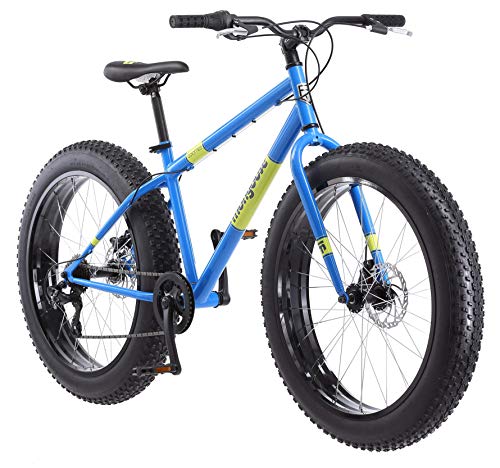
- 26-inch supersized knobby tires
- Seven-speed drivetrain
- Front and rear mechanical disc brakes
Best For: Beginner to intermediate riders on off-road trails
Everyday Trail Explorer

- Lightweight aluminum frame
- Front suspension fork
- Seven-speed twist shifting
Best For: Intermediate riders on trails and unpaved paths
All-Terrain Gear Specialist
Explorer 21-Speed Mountain Bike

- 21-speed drivetrain
- Lock-out suspension fork
- Dual mechanical disc brakes
Best For: Intermediate adults riding varied off-road terrain
Multi-Size Adventure MTB

- 24-, 26-, and 27.5-inch options
- 21-speed derailleur
- Adjustable seat and handlebars
Best For: Riders 13 and older seeking flexible mountain-bike sizing
Premium Trail Performance
SAVADECK Titan 612 Carbon Fiber

- Carbon fiber full-suspension frame
- Shimano DEORE 12-speed drivetrain
- Four-piston hydraulic disc brakes
Best For: Technical trails and enduro riding
Everyday Value Pick
WEIZE 26/27.5-Inch Mountain Bike

- 26- and 27.5-inch size options
- Full suspension for light trail comfort
- 21-speed gearing with dual disc brakes
Best For: Commuting, fitness, and casual trail rides
Versatile Hardtail Choice

- Aluminum hardtail frame
- 2.3-inch knobby mountain tires
- 21-speed trigger shifting and disc brakes
Best For: Pavement, gravel, and moderate unpaved trails
Best Beginner Trail Value

- 21-speed twist shifting
- Front suspension for uneven paths
- Adjustable padded saddle
Best For: Beginner riders seeking a versatile bike for gravel, commutes, and recreational trails
Best Full-Suspension Comfort

- Front and rear suspension
- 18-speed twist shifting
- 85% pre-assembled with one-year warranty
Best For: Recreational riders wanting extra comfort on pavement, gravel, and uneven paths
Best Aluminum Frame Option

- Lightweight aluminum frame
- 21-speed drivetrain with twist shifters
- Front suspension and disc brakes
Best For: Adult beginners wanting a lighter trail bike for neighborhood rides and paths
Fat-Tire Trail Cruiser – Dolomite Mountain Bike
The Mongoose Dolomite is a mountain bike for beginner to intermediate riders who want added traction on off-road trails. Its 26-inch supersized knobby tires, rigid steel frame, seven-speed drivetrain, and mechanical disc brakes make it a practical choice for riders between 5’4″ and 6′ tall.
Best For: Beginner to intermediate adults seeking a fat-tire mountain bike for mountain terrain and off-road riding.
Pros:
- Supersized knobby tires provide substantial trail traction.
- Seven-speed twist-grip drivetrain supports smooth gear changes.
- Front and rear mechanical disc brakes offer controlled stopping.
- Threadless headset and alloy rims help support adjustability and lower weight.
Cons:
- At 52 pounds, it is relatively heavy for a mountain bike.
- The rigid suspension setup does not provide a suspension fork for absorbing bumps.
- It arrives 80% assembled and requires several tools to finish setup.
Choose the Dolomite when tire flotation and a cruiser-like ride matter more than low weight or front suspension. Its wide tires and straightforward seven-speed setup suit casual trail exploration, while the mechanical disc brakes add useful control.
Everyday Trail Explorer – Flatrock Mountain Bike
The Mongoose Flatrock is a hardtail mountain bike built for riders who want a lighter aluminum frame and front suspension for unpaved paths. With 26-inch wheels, seven speeds, knobby tires, and a fit range of about 5’4″ to 6’2″, it is positioned as an approachable option for teens and adults.
Best For: Intermediate riders exploring mountain terrain, bike paths, and unpaved trails.
Pros:
- Aluminum frame offers a lightweight yet durable platform.
- Front suspension fork helps absorb bumps and uneven terrain.
- Seven-speed twist shifters provide simple gear selection.
- Knobby tires are designed for durable traction.
Cons:
- Linear-pull V brakes generally offer less stopping power than disc brakes.
- Seven speeds provide less range than many 21-speed mountain bikes.
- The supplied details do not specify a completed-assembly percentage.
The Flatrock is a balanced pick for riders who want front suspension without moving to a more complex drivetrain. It makes the most sense for mixed recreational riding where manageable weight and straightforward shifting are priorities.
All-Terrain Gear Specialist – Explorer 21-Speed Mountain Bike
This Explorer mountain bike emphasizes gear range and impact control for riders tackling varied terrain. Its 21-speed system, lock-out suspension fork, dual-disc brakes, and high-carbon-steel frame are paired with a quick-adjust seat post and 26-inch wheels.
Best For: Intermediate adult riders who want multiple gears and suspension for gravel, dirt, rocky, and mountain paths.
Pros:
- Twenty-one speeds provide a broad range for changing terrain.
- Lock-out suspension fork helps manage bumps and dips.
- Mechanical dual-disc brakes provide responsive stopping control.
- Quick-adjust seat post makes height changes easier.
Cons:
- The high-carbon-steel frame may be heavier than an aluminum alternative.
- It arrives about 85% assembled and still requires adjustment of the brakes and gears.
- The supplied information lists a 26-inch size only, limiting stated fit guidance.
The Explorer is a feature-focused choice for riders who value gearing flexibility and braking performance. Consider it when varied surfaces and a smoother ride over bumps are more important than having the lightest possible frame.
Multi-Size Adventure MTB – Thrax Mountain Bike
The Thrax is a mountain bike designed to accommodate different riders through 24-, 26-, and 27.5-inch wheel options. It combines a high-carbon-steel frame, front suspension fork, 21-speed derailleur, disc brakes, adjustable contact points, and quick-release wheels.
Best For: Riders aged 13 and older who want multiple wheel-size options and an adjustable setup for mountain terrain.
Pros:
- Three wheel sizes offer more flexibility for rider fit.
- Twenty-one-speed gearing supports varied terrain.
- Front suspension fork improves comfort and terrain adaptability.
- Adjustable handlebars and seat support a more personalized position.
Cons:
- The listed 24-inch configuration may not suit every adult rider.
- High-carbon-steel construction can add weight compared with aluminum.
- It arrives 75% pre-assembled, so more setup is required than with a nearly assembled bike.
The Thrax stands out for its sizing flexibility and adjustable components. Verify the selected wheel size before buying, then expect a useful combination of front suspension, 21-speed gearing, and disc brakes for recreational mountain riding.
Premium Trail Performance – SAVADECK Titan 612 Carbon Fiber
The SAVADECK Titan 612 is a high-performance choice among mountain bikes for riders tackling technical trails, rocky descents, and demanding climbs. Its carbon fiber full-suspension frame, 12-speed drivetrain, and four-piston hydraulic brakes are aimed at aggressive off-road riding.
Best For: Experienced trail and enduro riders who want lightweight construction, extensive suspension adjustment, and strong braking performance.
Pros:
- Lightweight carbon fiber full-suspension frame with internal cable routing
- DNM air shock with three-stage lockout and rebound adjustment
- Shimano DEORE M6100 12-speed groupset for a broad gear range
- Four-piston hydraulic disc brakes and 2.4-inch Continental tires
Cons:
- Performance-oriented features may be more than casual riders need
- Listed in a single 29-inch, 29*17 configuration
With its adjustable suspension, wide tires, and powerful brakes, this is the most trail-focused option in the group. It is best suited to riders who will regularly use its advanced components on rough terrain.
Everyday Value Pick – WEIZE 26/27.5-Inch Mountain Bike
WEIZE 26 27.5 in Mountain Bike Trail MTB Bicycle for Men Women (Gray, 26 Inch)
Check Price On AmazonThe WEIZE mountain bike is a practical option for everyday riders who want a versatile bike for commuting, fitness, park trails, gravel paths, and light outdoor use. Its aluminum frame, full suspension, and dual disc brakes provide useful comfort and control for mixed casual riding.
Best For: Beginners and recreational riders who need a flexible bike for paved roads, neighborhood rides, and light trails.
Pros:
- Available with 26-inch and 27.5-inch wheel options for different rider heights
- Front and rear suspension help absorb bumps on uneven surfaces
- 21-speed gearing supports flat roads, hills, and changing terrain
- Dual disc brakes, kickstand, and front reflector add everyday practicality
Cons:
- Designed for light trails and everyday riding rather than aggressive mountain use
- Product details list a carbon steel frame despite the bullet description identifying an aluminum frame
The WEIZE stands out as an accessible, comfort-oriented choice for mixed surfaces. Choose the wheel size according to the stated height ranges, and keep expectations focused on casual rather than technical trail riding.
Versatile Hardtail Choice – Mongoose Grafton 21-Speed
The Mongoose Grafton is a hardtail option among mountain bikes, combining an aluminum frame, front suspension fork, knobby 2.3-inch tires, and 21-speed trigger shifting. It is built to move from pavement to singletrack while keeping the setup straightforward for recreational trail use.
Best For: Riders seeking a versatile 26-inch bike for pavement, gravel, and unpaved trails with a front-suspension setup.
Pros:
- Aluminum hardtail frame with modern geometry and internal headset
- 2.3-inch knobby tires provide grip and stability on varied terrain
- 21-speed drivetrain with trigger shifters offers flexible gearing
- Mechanical disc brakes provide all-weather stopping control
Cons:
- Front suspension only, so it offers less compliance than a full-suspension bike
- 26-inch wheels may provide less rollover than larger wheel formats
For riders who want one bike for roads and moderate trails, the Grafton offers a balanced hardtail configuration. Its stated fit range is 5’4″ to 6’2″, with a maximum recommended rider weight of 220 pounds.
Best Beginner Trail Value – Huffy Stone Mountain 26-Inch
Huffy Stone Mountain 26" Mountain Bike, 21-Speed, Front Suspension, Matte Black
Check Price On AmazonIf you want an approachable option for everyday rides and light trail use, the Huffy Stone Mountain is one of the more versatile mountain bikes in this group. Its 21-speed twist shifting, front suspension, and 26-inch wheels suit recreational rides on gravel, unpaved trails, and moderate hills.
Best For: Beginner riders who want a versatile mountain bike for neighborhood commutes, gravel, and recreational trails.
Pros:
- 21-speed Shimano twist shifting helps adapt to hills and changing terrain.
- Front suspension fork absorbs bumps on uneven paths.
- Adjustable padded saddle and kickstand add everyday convenience.
- Supports riders up to 220 pounds and includes easy assembly features.
Cons:
- At 37 pounds, it is relatively heavy to lift and transport.
- Dual linear-pull brakes are less feature-rich than disc-brake setups.
- The listed minimum rider height is 60 inches, limiting fit for shorter riders.
The Huffy is a practical starting point for riders prioritizing broad usability and simple controls over premium components. Check the size and weight requirements before ordering.
Best Full-Suspension Comfort – WEIZE 26-Inch Mountain Bike
The WEIZE stands out among these mountain bikes with both front and rear suspension. That setup, combined with wide all-terrain tires and an adjustable seat, makes it a comfortable choice for recreational rides across pavement, park paths, gravel, and uneven surfaces.
Best For: Beginner and recreational riders who value extra bump absorption and a broad fit range.
Pros:
- Front fork and rear coil shock help absorb bumps on uneven ground.
- 18-speed twist shifting provides options for climbs and level roads.
- Dual V-brakes provide hand-controlled braking at both wheels.
- Arrives 85% pre-assembled and includes tools plus a one-year warranty.
Cons:
- Its high-carbon steel frame may feel heavier than an aluminum-frame alternative.
- The 26-inch version is intended for riders approximately 5’2″ to 6’2″.
- Brake adjustment and final assembly are still required before riding.
Choose the WEIZE if comfort over bumps is more important than minimizing weight. Its recreational design and dual suspension are best matched with everyday paths and moderate trails rather than highly technical riding.
Best Aluminum Frame Option – Schwinn High Timber ALX
The Schwinn High Timber ALX is a strong pick for riders who want an aluminum-frame mountain bike with front suspension and disc brakes. Its 21-speed drivetrain, knobby tires, and alloy wheels are suited to neighborhood rides and trails, while the quick-release seat post simplifies fit adjustments.
Best For: Adult beginners seeking a relatively lightweight aluminum-frame bike for neighborhood riding and trails.
Pros:
- Lightweight aluminum frame and alloy wheels help reduce carrying weight.
- 21-speed twist shifting with a rear derailleur supports varied terrain.
- Front suspension and wide knobby tires provide trail-oriented stability.
- Disc brakes and a quick-release seat post add control and adjustability.
Cons:
- The 26-inch configuration is listed for riders 5’3″ to 5’8″, so fit may be limited.
- It arrives 80% assembled and requires several tools for setup.
- Front suspension is less bump-absorbing than a full-suspension design.
The High Timber ALX is appealing when frame weight and braking hardware matter more than full suspension. Confirm the selected wheel and frame configuration, since this model is offered in multiple versions.
How We Picked These Mountain Bikes
We focused on the features that matter most for recreational trail riding and mixed-surface use: frame construction, wheel size, suspension design, gearing, braking, tire style, rider fit, and intended terrain. The selection includes hardtails, dual-suspension bikes, fat-tire models, and several wheel sizes so beginners, casual riders, and more aggressive off-road cyclists can compare realistic alternatives.
Because specifications and sizing can vary by configuration, confirm the current listing, available frame size, weight limit, and assembly requirements before ordering. A bike that fits correctly is usually a better choice than one with more gears or suspension features that you do not need.
Quick Comparison
- Best for snow, sand, and loose terrain: The Mongoose Dolomite’s wide fat tires provide extra flotation and traction.
- Best for lightweight performance: The SAVADECK Titan 612 stands out with a carbon-fiber frame and 12-speed drivetrain.
- Best for broad household appeal: Schwinn High Timber models offer multiple wheel and speed configurations.
- Best for budget-conscious beginners: Mongoose Flatrock, Huffy Stone, and WEIZE models offer approachable features for casual riding.
- Best for added comfort on rough paths: Dual-suspension options such as the WEIZE adult model can soften impacts, though they may weigh more.
Key Buying Factors for Mountain Bikes
Fit and Wheel Size
Start with rider height, inseam, and the manufacturer’s sizing chart. Smaller wheels can feel easier to control, while 27.5- and 29-inch wheels generally roll more smoothly over obstacles and maintain momentum better. Do not choose by wheel diameter alone; frame fit and standover clearance matter just as much.
Hardtail or Dual Suspension
Hardtails use front suspension only and are typically lighter, simpler, and easier to maintain. They suit paved paths, gravel, beginner trails, and moderate singletrack. Dual-suspension bikes can improve comfort and traction on rougher terrain, but they cost more, add weight, and require additional maintenance.
Gearing, Brakes, and Tires
More gears provide flexibility on climbs but do not automatically indicate better performance. Disc brakes can offer dependable stopping in wet or uneven conditions, while mechanical systems are generally easier to service than hydraulic ones. Knobby tires are useful on dirt; wider fat tires are better for sand, snow, and loose surfaces but can feel slower on pavement.
Frame and Assembly
Aluminum frames commonly provide a useful balance of low weight, durability, and price. Steel frames can be economical and resilient but heavier, while carbon fiber is lighter and more expensive. Check whether professional assembly or a brake and derailleur adjustment is recommended after delivery.
Who Should Buy Which Mountain Bikes?
Choose an entry-level hardtail if you are learning trail riding, commuting occasionally, or mainly using bike paths and packed gravel. Pick a fat-tire model for snow, beach routes, or soft ground. A dual-suspension bike makes more sense for riders regularly tackling rocky, uneven trails and prioritizing comfort over minimum weight.
Experienced riders who want faster climbing, lower weight, and more precise component performance may prefer the carbon-fiber SAVADECK. For families or households with different riders, prioritize available sizes and wheel configurations from brands such as Schwinn, WEIZE, Huffy, or Mongoose. Whatever you choose, wear a properly fitted helmet and verify the bike is adjusted before your first serious ride.